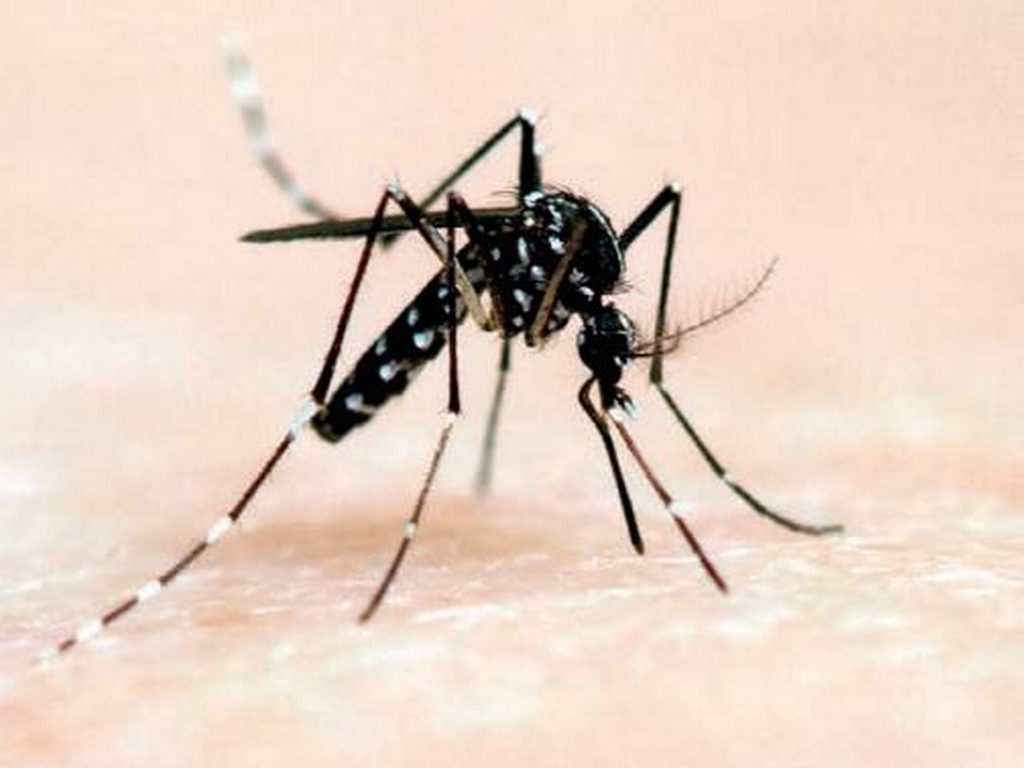
Dengue fever is a vector borne fever, caused by a virus known as arbovirus which is spread by the bite of mosquitoes (Aedes-aegypti, main vector of the disease). This is also known as Break bone fever, because this fever produces very much pain in bones and joints.
Dengue fever is a self-limiting disease. When there is a prevalence of Aedes aegypti and Aedes albopictus together, with circulation of more than one type of dengue virus in a particular area, it gives birth to either Dengue Haemorrhagic Fever (DHF) or Dengue Shock Syndrome (DSS).
When an infective mosquito carrying dengue virus bites a person, the virus enters the skin together with the mosquito's saliva. It enters white blood cells, and multiplies inside the cells and they move throughout the body. The white blood cells respond by producing a number of signalling proteins, such as cytokines and interferons, which produces many of the symptoms, such as the fever, the flu-like symptoms, and the severe pains. In severe infection, the virus production inside the body is greatly increased, and many more organs (such as the liver and the bone marrow) can be affected. Fluid from the bloodstream leaks through the wall of small blood vessels into body cavities due to capillary permeability. As a result, less blood circulates in the blood vessels, and the blood pressure becomes so low that it cannot supply sufficient blood to vital organs. Furthermore, dysfunction of the bone marrow due to infection of the stromal cells leads to reduced numbers of platelets, which are necessary for effective blood clotting; this increases the risk of bleeding, the other major complication of dengue fever.
The Aedes aegypti mosquito breeds during rainfall and in humidity. Its favourable temperature and weather for the influence of life span is humid wet weather, it best survives in the temperature between 160C-300C and relative humidity of 60%-80%.
It breeds in a hollow vessels and containers where rain water is accumulated.
It is the fever which can affect both the sexes of all age groups.
INCUBATION PERIOD IS- 3 TO 10 DAYS
Dengue patients have repeated attacks of chills, facial flushing, with non-specific febrile syndrome which may accompanied by maculopapular rashes.
Other symptoms may include –
Fever is usually between 390C-400C.skin eruptions appear in majority of the cases. The rashes may be reddish, pointed, maculopapular mainly at face, neck and chest. These rashes last up to 2 hours to several days.
Fever lasts for about 5-7days. Infection with 1 serotype gives immunity against that particular serotype and partial protection against others.
It’s the infection caused by more than one dengue virus (double dengue serotypes). Initially the dengue haemorrhagic fever is also very similar to classical dengue fever but shortly after the fever, symptoms of leakage of plasma appears with haemorrhagic symptoms, which also appears such as gum bleeding, epistaxis, haematuria.
Dengue haemorrhagic fever turns to dengue shock syndrome if left untreated, including persistent headache with nausea and vomiting, restlessness.
There is a persistent decrease in platelet count which causes haemorrhage.
Shock syndrome is a dangerous complication of dengue infection and is associated with high mortality. Severe dengue occurs as a result of secondary infection with a different virus serotype. Increased vascular permeability, together with myocardial dysfunction and dehydration, contribute to the development of shock, with resultant multi organ failure. The onset of shock in dengue can be dramatic, and its progression relentless. The pathogenesis of shock in dengue is complex. It is known that endothelial dysfunction induced by cytokines and chemical mediators occurs. Diagnosis is largely clinical and is supported by serology and identification of viral material in blood. No specific methods are available to predict outcome and progression. Careful fluid management and supportive therapy is the mainstay of management. Corticosteroids and intravenous immunoglobulins are of no proven benefit. No specific therapy has been shown to be effective in improving survival.
Homeopathy offers many medicines which may help in Dengue as they cover the symptoms of Dengue fever. Many homeopaths consider Eupatorium perf. and Arsenic album as preventive medicines for Dengue.
Phosphorus, Bryonia, Calcarea carb, Rhus toxicodendron , Sulphur, Tuberculinum, Sepia, Arsenicum album, Natrium mur, Nux vomica, Eupatorium perp, Lycopodium, Pulsatilla, Belladonna, Merc sol, Causticum, Lachesis, China, Ferrum met, Pyrogenum
Lachesis, Phosphorus, Crotalus horridus, Anthracinum, Bryonia, China, Lycopodium, Phosphoric acid, Pyrogenium, Rhus toxicodendron, Sulphur, Belladonna , Carbo veg, Ferrum phos, Silicea, Arsenic album, Arnica montana, Baptisia, Muratic acid, Apis
Homeopathy treatment is based on strict individualisation. Please consult a professional homeopath to find the most suitable remedy for a given case.
Dr. Manish Bhatia (BHMS, M.Sc. (Hom) U.K.) is an internationally acclaimed homeopathy physician, working as a consultant at Asha Homeopathy, Jaipur’s leading homeopathy clinic at Civil Lines and Jhotwara. He is also the Founder Director of Hpathy.com, world’s leading homeopathy portal. He is also a well-known speaker and author of several books. http://www.doctorbhatia.com/ | manish@hpathy.com | 9549600600
Share your reports and get an expert review and cost estimate within 48 hours.

Liver Transplant Surgeon, Gastrointestinal Surgeon
Experience: 29 years



Get your personalized treatment plan and quote within 48 hours.