“Learn about TAVR, including its benefits, risks, procedure, recovery process, and how it helps treat aortic valve conditions.”
Transcatheter Aortic Valve Replacement (TAVR), also known as Transcatheter Aortic Valve Implantation (TAVI), is a minimally invasive procedure which is used to replace a diseased aortic valve. This procedure is known for having transformed the treatment of severe aortic stenosis especially in people who might face higher risk with conventional open-heart surgery.
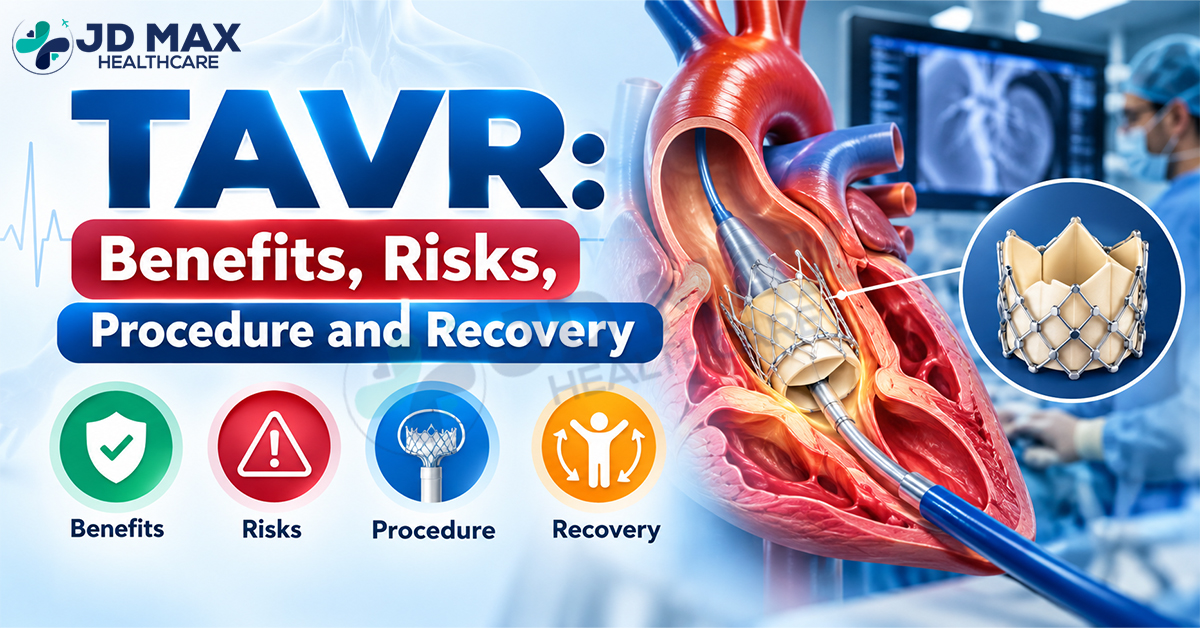
TAVR doesn’t require opening of chest or removal of old valve. It simply delivers a replaced valve through a catheter which is sent through an artery in the groin, and positioned inside the problematic aortic valve.
Human heart has four valves which help blood flow in the right direction. The aortic valve lies between the left ventricle and the aorta which opens when the heart pumps blood in the body. In aortic stenosis, the valve narrows and doesn’t open properly and the heart has to work harder to pump blood through the narrow opening. As part of cardiology treatment, managing aortic stenosis may involve procedures such as TAVR.
Over time, severe aortic stenosis causes symptoms like fatigue, chest discomfort, breathlessness, and dizziness. TAVR procedure is done in this situation to replace the diseased valve. During this procedure, the replacement valve is mounted on a catheter which is introduced through an artery mostly the femoral artery in the groin region.
Once it reaches aortic valve in the heart, the replacement valve is positioned inside the existing valve. The new valve now pushes the old valve leaflets aside and starts regulating the blood flow. On the basis of the type of valve used, it expands either like a balloon or through the self-expanding mechanism.
Before conducting this procedure, the medical team evaluates the condition of the patient’s blood vessels, heart, kidney function, and anatomy. Imaging and CT scan is done to decide whether this procedure can be done or not.
TAVR is a treatment for patients who have severe aortic stenosis and have been examined for eligibility. This procedure is considered risk free as compared to open heart procedure. Whether it is appropriate for a patient or not depends on several factors like their age, anatomy, surgical risk, severity of valve issue, and the overall health. The final decision is taken by the team of cardiac specialists.
You Can Also Read:- Kidney Infection: Early Signs, Causes, Treatment Options and Recovery
The major advantage of TAVR surgery is that it is performed through a catheter, the other benefits include:
1. Less invasive treatment
TAVR doesn’t involve opening the chest as in open heart surgery and does not require cardiopulmonary bypass as required in the conventional process.
2. Shorter hospital stay
Patients who go through TAVR can go home within a few days; the exact duration depends on the health of the patient.
3. Faster recovery
As the procedure is less invasive, the recovery happens faster as compared to that in an open-heart surgery.
4. Improvement in symptoms
When the treatment of aortic stenosis is done, the symptoms such as fatigue, breathlessness, and dizziness are likely to improve.
5. Improvement in quality of life
Patients who had limited their activities due to severe valve disease may experience improvement in their ability to do daily tasks.
6. An option for patients at increased surgical risk
Patients who are at a substantial risk due to age and other medical conditions, TAVR is an alternative treatment for them.
TAVR is a minimally invasive procedure but it is still a major heart surgery. There is a possibility of the following complications.
Stroke : There are chances of a small material getting carried to the brain leading to a stroke during the procedure.
You Can Also Read:- Pulmonary Fibrosis Treatment: Symptoms, Causes, Diagnosis And Care Guide
TAVR valve replacement recovery is faster than the conventional open-heart surgery. However, patient needs continuous monitoring and the medical team monitors the blood pressure, functioning of the new valve, and heart rhythm. Some patients are able to walk soon after the procedure and the timing entirely depends on the medical condition, access route, and any complications that might have occurred.
Once discharged, patients are advised to follow the instructions given by their cardiologists. They are required to take prescribed medicine, do physical activities as instructed, follow up on appointment, take proper wound care, and monitor any symptoms. They should take medical help if they experience breathlessness, fainting, bleeding, chest pain weakness or difficulty in speech.
Follow-up is important as the medical team requires to monitor the functioning of the valve and check the patient’s overall health.
TAVR treatment has changed how severe aortic stenosis was treated by changing a diseased aortic valve with a catheter rather than conducting a conventional open-heart surgery. This has turned out to be an important treatment option for those who cannot go through the conventional open-heart surgery due to potential risk.
TAVR is a less invasive procedure, requires shorter hospital stay, and leads to faster recovery. There is a risk of complications like a stroke, bleeding, rhythm disturbance, valve leakage, or kidney injury. This treatment isn’t for all and is suitable for selected patients only who have required heath, age, and anatomy.
If you are facing any heart problem then consult and get treated by the best cardiac surgeon in Jaipur at JD Max Healthcare. Here, you will get all the latest diagnostic facilities, experienced medical team, and best treatment and care. Book an appointment now.
1. Who is a suitable candidate for TAVR?
A suitable candidate for TAVR is the one who has significant aortic valve disease or most common severe symptomatic aortic stenosis with an anatomy which is suitable for transcatheter valve implantation. Doctors not only check the age factor but also the health, anatomy and other medical conditions that might be there.
2. How long does the TAVR procedure take?
The TAVR procedure commonly takes 1-2 hours but the total time spent in the procedure area is longer when preparation and monitoring time is included. The exact duration is based on the patient’s condition, access route, type or valve and the severity of the procedure.
3. Is TAVR safer than open-heart valve replacement surgery?
Every patient is different and so are their requirements. There is no same answer for everyone. The procedure is selected on the basis of medical condition of the patient.
When we compare both the procedures, TAVR involves less invasive access and provides benefits like faster recovery. The open-heart surgery may be referred to patients when they have other heart conditions as well.
4. How long does it take to recover after TAVR?
Recovery after TAVR depends on the patient’s health and severity of their medical condition. Generally, patients start walking within a day and leave the hospital after a short stay. There are many people who are able to return their normal lives within a few weeks.
5. How long does a TAVR valve last?
TAVR provides a long-term function but their durability is dependent on the factors including patient’s age, health, valve type and other clinical factors. There is an ongoing long-term data follow-up for TAVR valves especially because today, TAVR is not just restricted to older patients but is also used in younger patients as well. And when it comes to younger patients, they will require the treatment for decades.
Share your reports and get an expert review and cost estimate within 48 hours.

Liver Transplant Surgeon, Gastrointestinal Surgeon
Experience: 29 years




Get your personalized treatment plan and quote within 48 hours.