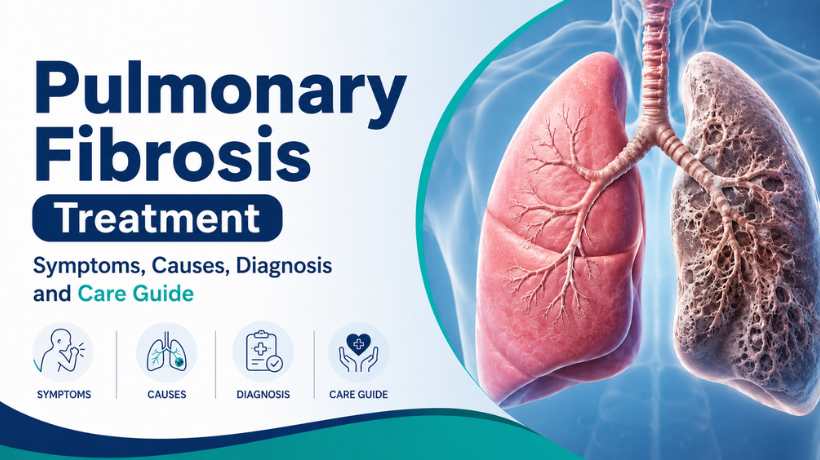
Pulmonary Fibrosis Treatment: Symptoms, Causes, Diagnosis And Care Guide
Pulmonary fibrosis is a lung disease caused by the scarring of lung tissue which affects its flexibility. This condition makes breathing tough and delivery of oxygen difficult. This condition cannot be cured but early diagnosis, pulmonary fibrosis treatment and lifestyle changes help in improving the quality of life and slowing down the progression.
Pulmonary fibrosis can affect people of all ages but is commonly diagnosed in the adults who are above 50 years of age. The symptoms develop gradually which makes the diagnosis tough. Many people take it as a sign of early aging, lack of fitness or respiratory issue. In the following guide, you will be reading about the symptoms, causes, diagnosis, and treatment available.
What Is Pulmonary Fibrosis?
It is a condition which leads to thickening, stiffening and scarring of the lung tissue. This scarring damages the tiny air sacs or the alveoli. When fibrosis progresses, the patients experience difficulty in breathing caused by reduction in the oxygen level. What makes it worse is that the tissue scarring once done cannot be returned to its normal state. It is a long-term condition which requires medical care.
Pulmonary fibrosis is one of the most serious lung issues for which the exact cause is remains unknown and therefore, it is sometimes also known as Idiopathic Pulmonary treatment. Although this condition is progressive, it mainly depends on the patients’ body whether it progresses rapidly or slowly.
Common Symptoms of Pulmonary Fibrosis
The common symptoms of pulmonary fibrosis can help in its timely diagnosis.
1. Shortness of Breath
One of the most common Pulmonary Fibrosis symptoms is breathlessness during physical activity. If you get out of breath while climbing stairs, exercising, or carrying groceries then it might be an indication. When the disease progresses, the shortness of breath starts occurring even during sleep.
2. Persistent Dry Cough
The other symptom is dry cough which lasts for more than months without any improvement. This cough may have a little or no mucus.
3. Fatigue
The reduction is oxygen level causes low energy, constant tiredness, reduction in stamina and difficulty in doing even the basic everyday tasks.
4. Chest Discomfort
Patients with pulmonary fibrosis have also experienced mild chest tightness especially during the physical activity.
5. Clubbing of Fingers
When the disease progresses, patients have observed that the fingertips become enlarged and rounded also known as digital clubbing.
6. Unexplained Weight Loss
The patients are likely to feel loss of appetite along with increase in the energy burnout caused by laboured breathing. It may lead to weight loss which is common in patients suffering from pulmonary fibrosis.
7. Muscle and Joint Pain
Pain in the muscles and joints is common especially when this lung disease is connected with the autoimmune disease.
You can read also:- Swelling in Feet: Causes, Symptoms & Effective Treatment
Causes And Risk Factors of Pulmonary Fibrosis
Pulmonary fibrosis may happen due to various factors of which some are known while most remain unknown. The commonly found Pulmonary fibrosis causes are as follows.
1. Idiopathic Pulmonary Fibrosis
Mostly, the cause behind this lung condition remains unidentifiable.
2. Environmental Exposure
People who work in mining, farming, manufacturing or construction field often get risked as they are exposed to different harmful particles like asbestos, Mold spores and bird droppings and dusts like silica, grain, coal, and metal.
3. Smoking
Smokers have high chances of getting pulmonary fibrosis as compared to non-smokers. Smoking causes lung damage and helps in the progression of this disease.
4. Certain Medications
There are certain medicines which can lead to lung scarring such as antibiotics, heart medications, chemotherapy drugs, and anti-inflammatory medicines. These medicines should not be discontinued without consulting from the specialist.
5. Radiation Therapy
Radiation treatment for cancers done during breast or lung cancer are likely to increase the risk of fibrosis.
6. Autoimmune Diseases
There are certain autoimmune disorders which affect the lung such as Lupus, Polymyositis, Dermatomyositis, Systemic sclerosis, and Rheumatoid arthritis.
7. Viral Infections
There are certain viral infections that have been connected with the lung inflammation.
8. Family History
Inherited genetic mutation increases the chances of susceptibility.
How Pulmonary Fibrosis Is Diagnosed
The Pulmonary fibrosis diagnosis is done by conducting physical examination, checking the medical history, conducting imaging and special tests.
Medical History
The medical history includes asking the symptoms, occupation, environment exposure, smoking history, medicine taken and the family history.
Physical Examination
The physical examination includes checking the sounds by listening to the lungs with a stethoscope, finger clubbing, signs of heart strain, and oxygen levels.
Chest X-ray
X-rays are conducted as they reveal the abnormal lung patterns which can be helpful in diagnosing fibrosis.
High-Resolution CT (HRCT) Scan
The detailed images provided under this scan helps in revealing honeycombing, reticular patterns, lung scarring, and distribution of fibrosis.
Pulmonary Function Tests (PFTs)
These are breathing tests which are conducted to measure airflow, lung capacity, oxygen transfer, and disease severity. They help in monitoring the disease progression over a period of time.
Pulse Oximetry
It is a painless sensor which is placed on the finger to measure the blood oxygen saturation.
Arterial Blood Gas (ABG)
This is a blood test which provides an accurate assessment of oxygen and carbon dioxide levels.
Six-Minute Walk Test
This six-minute walk is monitored to check the exercise tolerance, oxygen needs and the functional capacity.
Blood Tests
The blood tests are conducted to check and identify the autoimmune diseases.
Bronchoscopy
A lung sample is collected by using a flexible camera that is passed through the airways.
Surgical Lung Biopsy
In certain cases, a small piece of lung tissue is removed for microscopic examination.
You can read also:- Tonsil Stones: Symptoms, Causes, Removal & Treatment
Pulmonary Fibrosis Treatment and Care Options
This lung disease cannot be reversed but the Pulmonary fibrosis treatment options help in slowing the progression, relieving symptoms and reducing complications.
1. Antifibrotic Medications
There are two medicines – Pirfenidone & Nintedanib which have been approved in many countries for slow disease progression in idiopathic pulmonary fibrosis. Please note that the medicines should always be taken as prescribed by the practitioner.
2. Oxygen Therapy
Giving supplemental oxygen helps the patients whose oxygen level are low. It helps in improved sleep, reduces strain on the heart, betters exercising and makes breathing easier.
3. Pulmonary Rehabilitation
This combines education, emotional support, nutritional counselling, practicing of breathing techniques and supervised exercising.
4. Medications for Symptom Relief
There are certain medicines prescribed by doctor to relieve the symptoms and help in managing acid reflux, lung infections, persistent cough, anxiety, and depression.
5. Vaccinations
Patients should get vaccinated as getting vaccines such as influenza vaccine, pneumococcal vaccine and COVID-19 vaccine helps in avoiding the lung infection which can worsen its functioning.
6. Lung Transplant
Patients with the advanced disease are suggest lung transplantation to improve the quality of life. This transplantation depends on the age, health, disease severity and availability of donor organ.
Conclusion
Pulmonary fibrosis is a progressive lung disease which cannot be reversed. However, timely diagnosis can help in management and relieving of symptoms. A combination of medicines, oxygen therapy, balanced nutrition, physical activity and smoking avoidance help in improving the quality of life.
If you have been facing symptoms such as shortness of breath, fatigue, clubbing of fingers, tightness in chest or pain in joints then consult the best pulmonologist at JDMax Healthcare. The best lung treatment hospital in Jaipur offering comprehensive treatment and care to the patients. Book an appointment with our lung specialist now.
FAQs
Q.1. What are the early symptoms of pulmonary fibrosis?
Ans. The early symptoms of pulmonary fibrosis are consistent dry cough, fatigues, shortness of breath, and reduced exercise tolerance.
Q.2. What causes pulmonary fibrosis in adults?
Ans. Pulmonary fibrosis in adults may be caused due to long-term exposure to environmental pollutants, smoking, autoimmune disease, radiation therapy, certain medicines, viral infections or genetic factors. However, most of the time the cause behind Pulmonary fibrosis remains unknown.
Q.3. How is pulmonary fibrosis diagnosed?
Ans. The doctor checks the medical history, conducts physical examination, pulmonary function test, high-resolution CT scan, blood test, pulse oximetry, six-minute walk test, and in some cases bronchoscopy or lung biopsy.
Q.4. What are the treatment options for pulmonary fibrosis?
Ans. The symptoms are treated by giving antifibrotic medicines, oxygen therapy, pulmonary rehabilitation, suggesting vaccines for respiratory infection prevention and lung transplantation in severe cases.
Q.5. Can pulmonary fibrosis be managed with lifestyle changes?
Ans. Yes. Pulmonary fibrosis cannot be reversed but its symptoms can be managed. Preventing infections, taking a nutritious diet, exercising regularly, attending pulmonary rehabilitation and managing stress levels are helpful in improving the quality of life.