Tonsil Stones: Symptoms, Causes, Removal & Treatment
Tonsil stones are very common and overlooked condition today. It is generally harmless but causes bad breath, discomfort, and irritation. In the coming article, we will be reading about it in detail, tonsil stones causes, symptoms and treatment available. Always select the best hospital in Jaipur to get the right and timely treatment.
What Are Tonsil Stones?
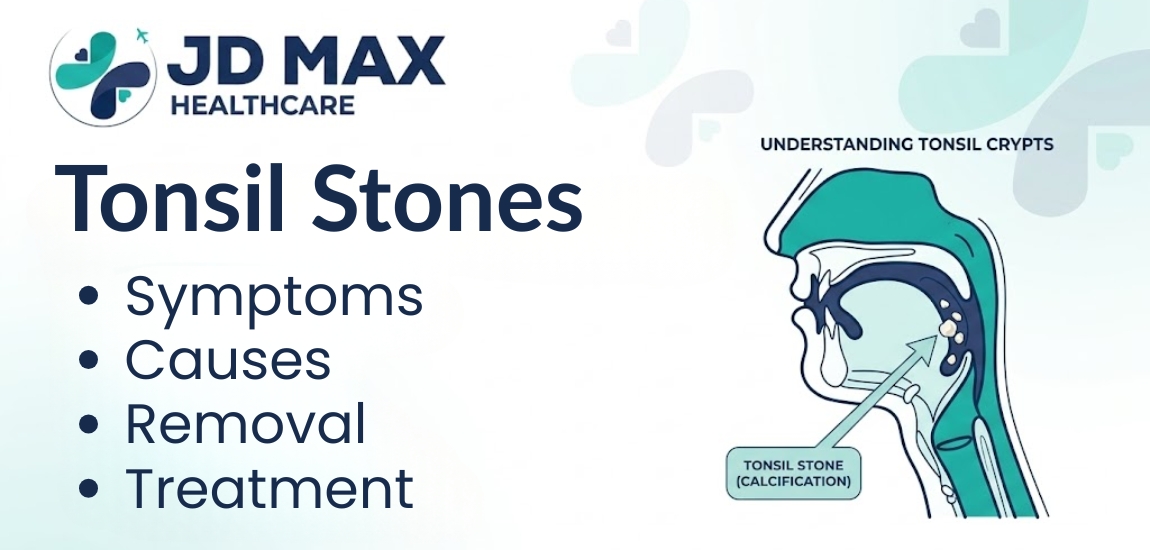
Tonsil stones are calcified deposits that are small and appear in the tonsillar crypts of tonsils. These are a part of the immune system and help in trapping the virus and bacteria that enter through nostrils or mouth, and in severe or recurring cases, procedures like tonsillectomy may be considered. This trapping system can sometimes lead to accumulation of bacteria, dead cells, mucus and food causing tonsil stones.
These tonsil stones can vary in size; they can be tiny and go unnoticed or large in the form of noticeable lumps. These are not contagious or dangerous. However, they can create irritation, grow in size or return back frequently.
What Are the Causes of Tonsil Stones?
There are several factors which lead to the formation of tonsil stones. Let’s read about what these are.
1. Deep Tonsil Crypts – This type of tonsil stone occurs due to natural deeper grooves in the tonsils. This leads to the accumulation of debris frequently leaving it trapped.
2. Poor Oral Hygiene – It is important to maintain oral hygiene as poor brushing and flossing can cause accumulation of bacteria and food particles. It increases the chances of development of stone formation.
3. Chronic Tonsillitis – When there occurs repeated infection in the tonsils, the crypts are likely to get enlarged creating an environment which assists stone formation.
4. Post-Nasal Drip – In case of excess mucus draining done from the nasal passages into the throat, a mixture of debris may be caused leading to stone development.
5. Bacterial Growth – Anaerobic bacteria is a bacterium which can growth without oxygen. It plays an important role in hardening the debris that has been trapped in tonsils and turning them into stones.
6. Dietary Habits – One of the dietary habits that can cause tonsil stones is eating dairy food and including sticky food in your diet. This type of consumption causes building up of mucus and accumulation of debris.
You Can Also Read :- Cost of Liver Transplant in India
What Are the Symptoms of Tonsil Stones?
Many people with tonsil stones don’t even know they have them especially when they are small. However, there are symptoms that can indicate their presence.
Common Symptoms:
- Bad breath (halitosis) – One of the most common symptoms is bad breath which is caused by the sulphur compounds released by the bacteria.
- White or yellow debris – If you have tonsil stones then there may be yellow or white debris visible on the tonsils.
- Sore throat – Tonsil stones generally cause irritation of sore throat.
- Difficulty swallowing – The patient is likely to feel as if something is stuck in the throat or difficulty in gulping the food.
- Metallic or unpleasant taste – When someone has tonsil stones, a different taste may be experienced in the mouth which is unpleasant or metallic.
Less Common Symptoms:
- Ear pain
- Swelling of tonsils
- Chronic cough
Can Tonsil Stones Be Prevented?
Tonsil stones can be prevented by maintaining good oral and throat hygiene.
Prevention Tips:
- Brush your teeth twice daily for better oral health.
- Floss regularly for clean mouth.
- Clean your tongue using a scarper to remove bacteria.
- Make a habit of gargling with salt water.
- Drink plenty of water.
- Avoid stick and dairy food.
- Avoid smoking as it encourages bacteria.
You Can Also Read :- Knee Replacement Surgery in India
How Are Tonsil Stones Treated?
There are numerous ways of tonsil stones treatment. The choice of treatment depends on the symptoms. Here is a list of treatment available.
1. Home Remedies
If you have small tonsil stones then these can be cured by the following home remedies.
- Saltwater gargles: Doing gargles with warm salt water help in reducing bacteria and removing the stones.
- Coughing: When you cough, the stones are likely to loosen up.
- Manual removal: You may use a clean finger or a cotton swab to cautiously remove them.
- Oral irrigators: There are low-pressure water devices which can be used for flushing out the debris.
2. Medical Treatment
The medical treatment for tonsil stones includes the following.
- Antibiotics: If there is an active infection then antibiotics may be prescribed by the doctor. Please note that this is not a permanent solution.
- Laser cryptolysis: This procedure is used for smoothening the tonsil crypts and preventing their recurrence.
- Curettage: This means tonsil stone removal by using the specialized tools.
3. Surgical Option
If the home remedies or the medical treatment does not work then doctor may advice tonsillectomy. This permanent solution is suggested to those with severe/recurrent condition.
Conclusion
Tonsil stones are very common and easily manageable. Generally, these occur from the poor oral hygiene and throat health. This condition is not serious but it can cause irritation and affect the confidence level. While timely diagnosis and treatment help in eliminating them, taking the preventive measures can help in avoiding them in the first place.
If you have been suffering from any of the symptoms mentioned in the above blog, it is better to consult at the best hospital in Jaipur. JD Max Healthcare is known for its team of specialist doctors who are expert in their field of service. They ensure that every patient gets the right consultation, are timely diagnosed and given customized treatment.
To get the best medical services, book an appointment right away.
FAQs About Tonsil Stones
1. Are tonsil stones dangerous?
Tonsil stones are not dangerous but can lead to irritation, discomfort and lower the confidence level. The patient might have bad breath, difficulty in swelling or feel uneasy.
2. Can tonsil stones go away on their own?
Yes, if the tonsil stones are small then they can easily go away naturally through coughing or swallowing. Maintaining good oral hygiene helps in preventing the tonsil stones.
3. Why do tonsil stones smell so bad?
Tonsil stones contain bacteria which are known for producing sulphur compounds. These are responsible for creating bad smell.
4. Who is more likely to get tonsil stones?
It has been observed that people who have poor oral hygiene get easily infected. Also, those who have constant throat infection are likely to get tonsil stones. Therefore, it is essential to practice oral hygiene.
5. When should I see a doctor?
If is best to consult a doctor if your tonsil stones are painful, large and reoccur. If you have been facing bad breath since long even after maintaining proper oral hygiene or you see that the symptoms are getting worse with time then book an appointment right away.